For us, the most interesting takeaway is not whether fast or slow roasting is “better.”
It is how easy it is to assume a profile is neutral or objective simply because it has become familiar.
That is something many roasters experience over time. A reference profile becomes standard practice and eventually stops being questioned.
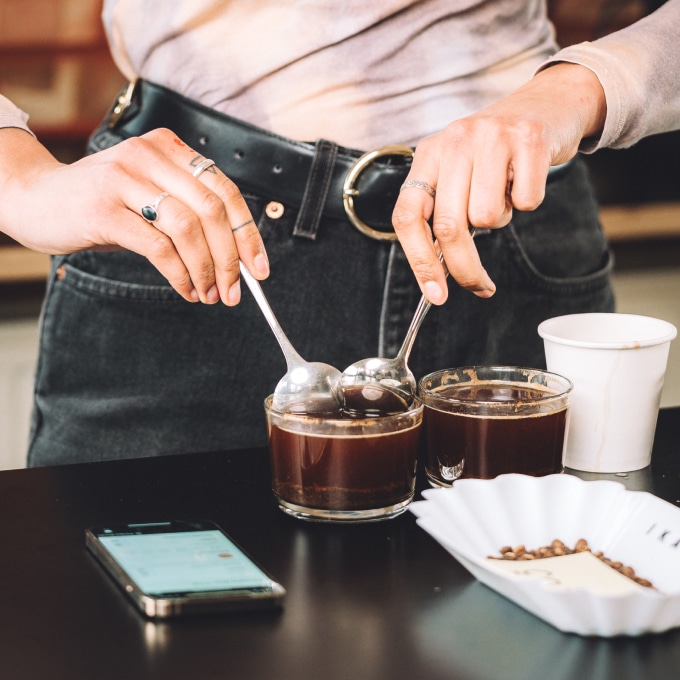
Experiments like this are valuable because they force us to return to the cup rather than relying entirely on theory.
Repeatability Makes Better Experiments
One reason this experiment works is because the variables are controlled closely.
Using repeatable sample roasting allows the roast profile itself to become the variable under investigation rather than inconsistencies between batches.
That creates clearer sensory comparisons and makes it easier to challenge assumptions with confidence.
In our view, this is one of the most useful applications of sample roasting technology, not just quality control, but curiosity.
Coffee Still Has the Final Say
Another interesting point from the article is that the results changed depending on the coffee.
A fast roast profile performed best on one coffee. A slower profile opened up complexity in others.
There was no universal winner.
And perhaps that is the real takeaway.
Roast profiles are tools, not rules. The only reliable way to understand what works for a coffee is still to taste it.